Vietnam Visa Photo Size and Requirements
Vietnam visa photo size and requirements for e-visa and visa on arrival: exact dimensions, background rules, and file specs. Apply today.

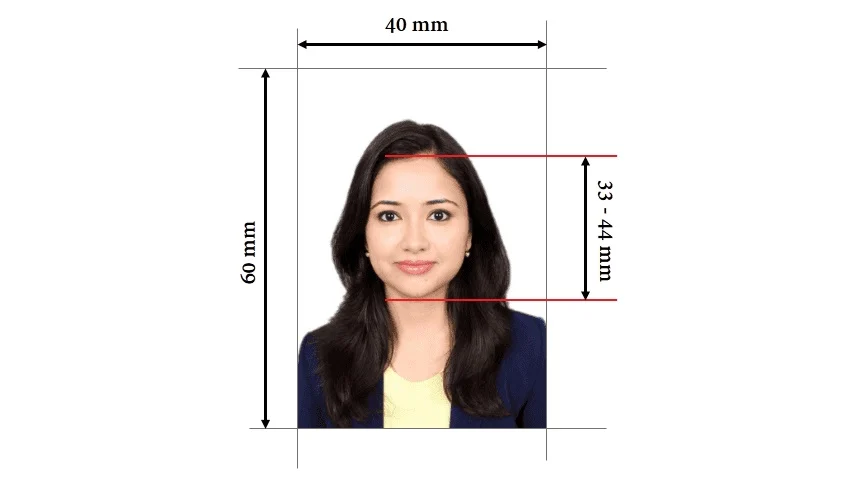
Vietnam visa photo size and requirements come down to one exact spec: 4x6cm, white background, no glasses, taken within the last 6 months. That single line covers the government e-visa system, visa on arrival, and embassy applications alike, though the file format differs depending on which route you use.
If you are applying for the e-visa, you will upload a digital JPG version of that same photo directly on the application form. If you are applying for visa on arrival or through an embassy, you still need a physical printed copy to hand over at the counter or the consulate window.
Most rejections do not come from a bad photo. They come from a technically wrong one: the wrong background color, a photo that is too old, glasses reflecting light, or a file that is cropped incorrectly. Below, you will find the exact dimensions, background rules, file specifications, and the most common mistakes that get a photo bounced back.
Get the spec right the first time and the rest of your Vietnam visa application moves forward without a second submission. The next section breaks down the exact size and framing rules you need to follow.
Vietnam visa photo size and requirements in brief:
| Requirement | Specification |
|---|---|
| Size | 4x6cm (or 2x2 inch) |
| Background | Plain white, no shadows or patterns |
| Glasses | Not allowed (prescription or sunglasses) |
| Photo age | Taken within the last 6 months |
| E-visa file format | JPG, under 1024Kb, minimum 400x600 pixels |
| Visa on arrival / embassy | Printed color photo required |
| Official application site | evisa.gov.vn |
- What Is the Correct Vietnam Visa Photo Size and Requirements?
- What Are the Background and Framing Rules for a Vietnam Visa Photo?
- How Recent Must a Vietnam Visa Photo Be?
- What File Format and Size Does the Vietnam E-Visa Require for Photo Uploads?
- Do Visa on Arrival and Embassy Applications Need a Printed Photo Instead?
- What Are the Most Common Reasons a Vietnam Visa Photo Gets Rejected?
- What Other Vietnam Visa Photo Rules Should You Know?
- Can You Wear Glasses or a Head Covering in a Vietnam Visa Photo?
- What Are the Photo Requirements for Infants and Children?
- Where Can You Get a Compliant Vietnam Visa Photo Taken or Edited?
- How Do You Take a Vietnam Visa Photo Yourself at Home?
- Can vietnamvisa-easy.com Check Your Photo Before You Submit It?
- Frequently asked questions
What Is the Correct Vietnam Visa Photo Size and Requirements?
The correct size for a Vietnam visa photo is 4x6cm, which is also accepted as a 2x2 inch photo in countries that use imperial measurements. Your head, including the top of your shoulders, must fill roughly 70-80% of the frame, with the vertical measurement from the bottom of your chin to the top of your head (excluding hair) landing around 26-32mm.
This is a tighter crop than a typical passport photo from some countries, so a photo taken for a different document may not pass as-is. If your head is too small in the frame, a photo booth or editing tool needs to recrop it before you submit it.
Both the government e-visa system and visa on arrival applications use the same 4x6cm standard. The difference between the two routes is not the size, it is the file format, which the next sections cover.
The table below converts the spec across the three measurement systems you are most likely to run into, depending on where you get the photo taken.
| Measurement | Value |
|---|---|
| Metric | 4cm x 6cm |
| Imperial | 2in x 2in |
| Digital minimum | 400 x 600 pixels |
| Head height (chin to crown) | 26-32mm |
A photo booth outside Vietnam will usually ask for the size in inches, while a printer or photo shop inside Vietnam will use centimeters. Either measurement is accepted, since 4x6cm and 2x2in describe the same physical print size.
What Are the Background and Framing Rules for a Vietnam Visa Photo?
The background must be a plain white background, with no texture, no shadow, and no pattern behind you. Photos taken against a colored wall, a patterned curtain, or an outdoor background are routinely rejected.
Framing and expression rules follow a standard format:
- Full head and the top of your shoulders visible, facing forward.
- Neutral facial expression, no smiling, frowning, or tilted head.
- Eyes open, looking directly at the camera.
- No glasses, whether prescription or sunglasses.
- No hat or head covering, except for religious or medical reasons (see the section on head coverings below).
- Color photo only, printed on quality photo paper if you need a physical copy.
Put together, the standard specification you will see repeated throughout this guide is 4x6cm, white background, no glasses. Every other rule on this page builds on that baseline.
How Recent Must a Vietnam Visa Photo Be?
Your Vietnam visa photo must have been taken within the last 6 months. This rule exists because immigration officers compare the photo against your current appearance at the port of entry, and an outdated photo makes that comparison unreliable.
A photo can technically still meet the size and background spec and still get flagged if the applicant's appearance has changed noticeably, for example after a major haircut, weight change, or if the photo shows signs of heavy editing. If you are not sure whether an old photo still looks like you, take a new one. It is a small cost against the risk of a delayed or rejected application.
Note: passport photos and visa photos are not automatically interchangeable, even if both are technically within 6 months old. Check that your photo also matches the 4x6cm, white background, no glasses spec before reusing it.
What File Format and Size Does the Vietnam E-Visa Require for Photo Uploads?
The Vietnam e-visa requires a digital photo in JPG format, no larger than 1024Kb, with a minimum resolution of 400x600 pixels, matching the 4x6cm aspect ratio. You upload this file directly on the online application form alongside a scanned copy of your passport bio page.
To prepare a compliant digital file:
- Take or select a photo that meets the 4x6cm, white background, no glasses spec.
- Crop it to a 400x600 pixel minimum, keeping the 2:3 aspect ratio intact.
- Save it as a .jpg file and confirm the file size is under 1024Kb.
- Upload the file to the official e-visa application form at evisa.gov.vn or through your service provider's form.
Note: a file that exceeds 1024Kb will usually be rejected by the upload tool itself before you even reach the review stage, so check the file size before submitting.
Is Digital Background Editing Allowed for a Vietnam Visa Photo?
Replacing a colored or patterned background with white using a photo app is generally accepted, as long as the result still looks like a real, unedited photo of your face. What is not accepted is editing your facial features, smoothing skin heavily, or removing glasses digitally instead of retaking the photo without them.
Immigration staff compare the photo against your passport photo and your face at the border. A background swap that leaves the edge of your hair or shoulders looking cut out, blurred, or mismatched in color temperature is a common giveaway of a poorly edited photo, and it can prompt a manual review even if the file technically meets the size and format spec. If you are unsure whether an edited photo will pass, a plain white bedsheet or wall and natural daylight will get you a compliant background without any editing at all.
What Should You Do If the Upload Tool Rejects Your Photo File?
An upload error almost always comes down to one of three things: the file is not a .jpg, the file is over 1024Kb, or the pixel dimensions fall under the 400x600 minimum. Check each one in order.
- Wrong file type: a .png or .heic file from an iPhone needs converting to .jpg before upload.
- File too large: compress the image or lower the resolution slightly, keeping it above the 400x600 pixel floor.
- Dimensions too small: re-crop from the original photo instead of the already-cropped version, since re-cropping a small file twice loses resolution.
If the form still rejects a file that meets all three checks, try a different browser or device, since some upload widgets have trouble with certain phone camera formats. Applying through a service provider that reviews the photo manually before submission avoids this back-and-forth entirely.
Do Visa on Arrival and Embassy Applications Need a Printed Photo Instead?
Yes. Visa on arrival and embassy applications require a printed photo, not a digital upload. The approval letter process for visa on arrival is handled online, but the physical photo only comes into play at the airport counter, where immigration staff stamp your passport upon arrival.
| Application route | Photo format required |
|---|---|
| E-visa | Digital JPG upload (under 1024Kb) |
| Visa on arrival | Two (02) printed photos at the airport counter |
| Embassy or consulate visa | Printed photo submitted with paper application |
For visa on arrival, bring two (02) printed copies of a photo that meets the 4x6cm, white background, no glasses spec, along with your approval letter, passport, and the visa stamping fee paid in cash at the counter. If your printed photo does not meet spec, some airports have an on-site photo booth, though relying on that is a risk during a busy arrival period.
Embassy and consulate applications follow the same core spec, but the exact photo count can vary by location. Some consulates ask for one photo, others ask for two. Check the specific embassy's checklist before you go, and default to bringing two (02) printed photos if the checklist does not state a number.
What Are the Most Common Reasons a Vietnam Visa Photo Gets Rejected?
Photos get rejected for a small, repeatable set of reasons, and almost all of them are avoidable with a quick check before you submit.
- Wrong background color: cream, gray, or blue backgrounds instead of plain white.
- Photo too old: taken more than 6 months ago, or the applicant looks noticeably different now.
- Glasses worn in the photo: glare, tinted lenses, or thick frames obscuring the eyes.
- Incorrect crop: head too small or too large in the frame, or the top of the head cut off.
- Low resolution: a blurry or pixelated photo, often from cropping a larger image too aggressively.
- File size over the limit: a JPG larger than 1024Kb for e-visa uploads.
- Non-neutral expression: smiling, tilted head, or eyes not looking at the camera.
Any one of these can trigger a request for a new photo, which adds time to an application you may already be running close to a deadline on. Checking against the 4x6cm, white background, no glasses standard before you upload or print is the fastest way to avoid a second submission.
A typical scenario: a traveler uploads a 3-year-old passport photo because it is the only digital copy on hand. The size and background pass the automated check, but the photo no longer resembles the applicant closely enough, and the application gets flagged for a photo update request. That single delay can cost 1-2 working days on an application that would otherwise clear the standard 5-7 working day process without any back-and-forth.
What Other Vietnam Visa Photo Rules Should You Know?
The core Vietnam visa photo size and requirements above cover almost every applicant. A few situations fall outside that standard case and are worth checking before you submit, from glasses and head coverings to photos for children and where to get a compliant photo taken.
Can You Wear Glasses or a Head Covering in a Vietnam Visa Photo?
No, prescription glasses and sunglasses are not allowed in a Vietnam visa photo, regardless of whether you wear them daily. Glare, reflection, and frames covering the eyes are the main reasons this rule exists, and there is no documented medical exception for corrective lenses.
Head coverings are treated differently. A head covering worn for religious reasons is generally accepted, provided your full face, from the bottom of the chin to the top of the forehead, remains clearly visible and no part of your face is in shadow. A hat or cap worn for style or comfort is not accepted.
What Are the Photo Requirements for Infants and Children?
Children and infants follow the same 4x6cm, white background, no glasses specification as adults. The photo must show only the child, with no toys, pacifiers, or another person's hand visible in the frame, even if the child cannot yet sit up on their own for the photo.
This applies to every child listed on a Vietnam visa application, including infants added to a parent's booking. A group booking for visa on arrival can cover up to 20 people, and each person, including children, needs an individual compliant photo.
Where Can You Get a Compliant Vietnam Visa Photo Taken or Edited?
You have three practical options for getting a photo that meets the spec:
- A passport photo booth or photo shop, which typically knows the 4x6cm, white background, no glasses standard already.
- A smartphone photo app that crops to the correct dimensions and replaces the background with white.
- A professional photographer or studio, if you want a higher-quality result before an important trip.
If you are already traveling and need a photo on short notice, look for a photo shop or convenience store near your hotel, since many airports and tourist areas in Vietnam and neighboring countries offer same-day passport and visa photo printing.
How Do You Take a Vietnam Visa Photo Yourself at Home?
Taking your own compliant photo at home is realistic if you have a plain white wall and a smartphone camera. Follow these steps:
- Stand about one meter from a plain white wall, in daylight or bright, even indoor lighting, with no shadow falling on the wall behind you.
- Remove glasses, hats, and any head covering not worn for religious reasons.
- Hold the phone at your own eye level, not angled up or down, and face the camera directly with a neutral expression.
- Take the photo, then crop it so your head and the top of your shoulders fill 70-80% of the frame.
- Check the final file against the 4x6cm, white background, no glasses spec before saving it as a JPG under 1024Kb.
Tip: avoid flash if it is the only light source, since it tends to wash out the background unevenly and cast a shadow on the wall behind you.
Note: a self-taken photo that still looks slightly off is not worth the risk on a time-sensitive application. If you are unsure after the fifth attempt, a photo shop will usually take five minutes and cost less than the delay a rejected photo causes.
Can vietnamvisa-easy.com Check Your Photo Before You Submit It?
Yes. When you apply through vietnamvisa-easy.com, the team reviews your photo against the 4x6cm, white background, no glasses spec as part of processing your e-visa or visa on arrival application, before it goes to the government system. That review is what catches a wrong background or an outdated photo before it becomes a rejected application and a lost day.
vietnamvisa-easy.com has operated since 2003 through its parent company, Discover Asia Travel, and has issued over 6,639 visas for more than 5,200 satisfied customers, with a 99.9% success rate. It is a private travel service, not a government agency, and does not replace the official e-visa portal at evisa.gov.vn, though it does prepare and check your application before submission. E-visa applications support up to 5 people per booking, and visa on arrival applications support up to 20 people per booking, so a family or small group can apply together with one set of correctly formatted photos.
To apply, visit vietnamvisa-easy.com and upload your photo alongside your passport bio page scan. If you have a question about whether your photo will pass, WhatsApp or call +84 86 99 77 366, or email support@vietnamvisa-easy.com. Support is available from 8:00 to 21:00 GMT+7.
For more on eligibility before you get to the photo stage, see [INTERNAL: vietnam-visa-requirements].
Read more about Vietnam Visa Blog
- No Hidden Charges
- Competitive price
- Fast reliable services
- Prompt Support via chat, email, phone
- Customer - Focused approach
- Money-back guarantee for declined applications
Frequently Asked Questions
What size photo do I need for a Vietnam visa?
You need a 4x6cm photo, also accepted as 2x2 inch, with a white background and no glasses, taken within the last 6 months.
Can I use a selfie for my Vietnam e-visa photo?
Generally no. A selfie rarely meets the plain white background, correct crop, and neutral expression rules, so it is likely to be rejected or flagged for review.
What happens if my visa photo does not meet requirements?
The application can be returned for a new photo, which delays approval. For e-visa applications, this means resubmitting a corrected JPG file before processing can continue.
Do I need a printed photo for visa on arrival?
Yes. Visa on arrival requires two (02) printed photos presented at the airport counter, in addition to your approval letter and passport.
Can I wear glasses in my Vietnam visa photo?
No, glasses are not permitted in a Vietnam visa photo, including prescription glasses. Remove them before the photo is taken.
Can I reuse an old passport photo for my Vietnam visa?
Only if it was taken within the last 6 months and meets the 4x6cm, white background, no glasses spec. Otherwise, take a new photo before you apply.
How many photos do I need for a Vietnam visa on arrival?
Two (02) printed photos, presented at the airport counter along with your approval letter, passport, and stamping fee.
Can I edit or crop my own photo before submitting it?
Yes, as long as the final result still looks like an unedited photo of your face against a plain white background, cropped to the 4x6cm size.