
Vietnam Visa for Australian Citizens: Complete 2026 Guide
A Vietnam visa for Australian citizens is required for almost every trip. This overview compares the e-visa and visa on arrival, sets general cost and timing expectations, and points you to deeper guides.

Vietnam visa for Australian citizens is required before almost every trip, since Australia does not appear on Vietnam's unilateral visa-exemption list. Ordinary Australian passport holders need either a Vietnam e-visa or a visa on arrival, and both can cover a single entry or multiple entries of up to 90 days.
The e-visa is processed entirely online and works for arrivals by air, land, or sea, while visa on arrival applies to air travel only and is built around a pre-approved approval letter that gets stamped at the airport counter when you land. Neither option outranks the other. The right pick depends on your entry point, how far ahead you are booking, and how comfortable you are handling the process without paper documents changing hands.
A small number of Australians skip the visa altogether: holders of a valid APEC Business Travel Card can enter for business stays of up to 90 days, and travelers flying directly to Phu Quoc Island and staying only there qualify for a 30-day exemption specific to that island. Everywhere else in Vietnam, and for every other purpose, a visa applies.
This page gives you the full picture, what a Vietnam visa is, which type to choose, and roughly what it costs and how long it takes, before you move on to the detailed guides on requirements, fees, processing time, the step-by-step application, and practical tips linked throughout.
Vietnam visa for Australian citizens in brief:
| Item | Detail |
|---|---|
| Visa required | Yes, for tourism, business, and most transit |
| Main exemptions | APEC Business Travel Card (business, up to 90 days), Phu Quoc direct-arrival exemption (up to 30 days) |
| Main options | E-visa, visa on arrival |
| E-visa government fee | $25 (single entry) / $50 (multiple entry) |
| VOA service fee | From $28 per person, plus a stamping fee paid in cash at the airport |
| General processing range | From roughly 1.5 working hours up to 5-7 working days, depending on the tier chosen |
| Validity | Up to 90 days, single or multiple entry |
| Vietnamese diplomatic presence in Australia | Embassy in Canberra, Consulates-General in Sydney and Perth |
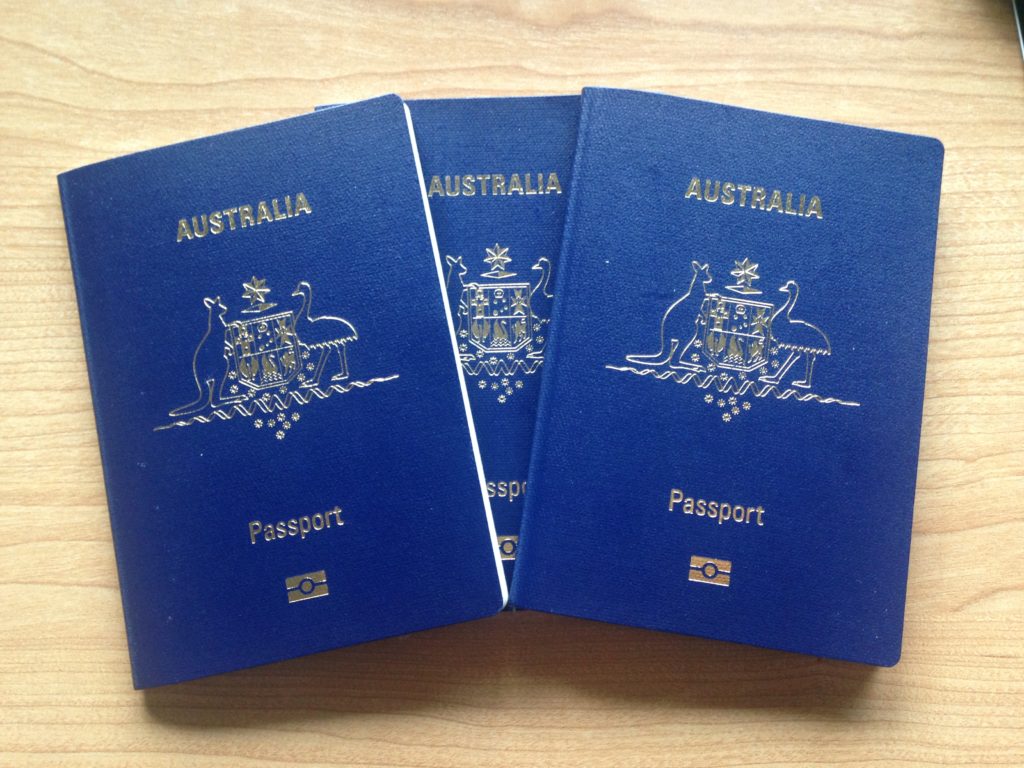
- Do Australian Citizens Need a Visa to Enter Vietnam?
- What Is a Vietnam Visa and Who Needs One?
- What Types of Vietnam Visa Can Australian Citizens Choose Between?
- What Are the General Eligibility and Document Requirements?
- How Much Does a Vietnam Visa Cost for Australian Citizens?
- How Long Does It Take to Get a Vietnam Visa for Australian Citizens?
- How Do Australian Citizens Apply for a Vietnam Visa?
- What Else Should Australian Travelers Know Before Visiting Vietnam?
- Frequently asked questions
Do Australian Citizens Need a Visa to Enter Vietnam?
Yes. Australian citizens need a visa to enter Vietnam, because Australia is not on Vietnam's list of nationalities that can travel visa-free. This applies to tourism, business trips, and most transit that goes beyond a short airside layover.
Two narrow exceptions exist, and both are worth knowing before you assume you need a full visa. If you hold a valid APEC Business Travel Card, you can enter Vietnam visa-free for business purposes for stays of up to 90 days. If you are flying directly into Phu Quoc Island and staying only on the island, you qualify for a 30-day visa exemption that applies to that destination alone, not to the Vietnamese mainland.
Outside those two cases, every ordinary Australian passport holder needs to arrange a visa before traveling, or apply for one that gets issued on arrival. This is not unusual. Vietnam runs a short list of visa-exempt countries, and Australia sits outside it, alongside most of the rest of the world.
What Is a Vietnam Visa and Who Needs One?
A Vietnam visa is official permission to enter Vietnam, issued either as an electronic document (the e-visa) or as a physical stamp placed in your passport (visa on arrival, or a sticker visa from an embassy). It confirms your identity, your travel purpose, and the length of stay you are approved for, and it must be presented alongside your passport at the port of entry.
Anyone who is not on Vietnam's exemption list needs one, regardless of age. Children travel on their own passport and need their own visa, even if they are listed on a parent's travel documents for other purposes. The visa itself does not guarantee entry; immigration officers still check your passport, your visa, and your onward travel details at the border.
Under Circular No. 28/2026/TT-BTC, Vietnam sets the government fee component of e-visa and arrival visa charges. vietnamvisa-easy.com is a private travel agency operating through its parent company, H2 Global Travel JSC., founded in 2012, and is not a Vietnamese government office. Its service fee is charged on top of, not instead of, the government fee, and covers document review, form submission, and support throughout your application.
What Types of Vietnam Visa Can Australian Citizens Choose Between?
Australian citizens can choose between two main routes: the Vietnam e-visa and visa on arrival. Both lead to the same result, a valid visa in hand before you clear immigration, but they differ in how you apply, how you enter, and what you present at the border.
The table below compares them side by side, without favoring either, so you can match the option to your own trip.
| Factor | Vietnam E-Visa | Visa on Arrival |
|---|---|---|
| How you apply | Entirely online, no embassy visit | Online application for a pre-approved approval letter |
| What you receive | The visa itself, as a PDF, by email | An approval letter, stamped into a visa at the airport counter |
| Entry points covered | Air, land, and sea, including 30+ land border checkpoints | Air travel only |
| Government fee | $25 single entry / $50 multiple entry | Stamping fee paid in cash on arrival |
| Service fee | Included in tiered pricing | From $28 per person |
| Best suited to | Land or sea entry, or travelers who prefer to arrive with the visa already issued | Air travelers who want a fast-track counter and are comfortable paying part of the fee in cash |
Vietnam E-Visa for Australian Citizens
The Vietnam e-visa is an electronic visa you apply for online, without visiting an embassy or consulate. You submit your passport bio page and a passport photo, pay by card, and receive the approved e-visa by email once it clears. You can apply directly through the official portal at evisa.gov.vn, or use an assisted service such as vietnamvisa-easy.com if you would rather have someone review your form before it is submitted.
It is valid for up to 90 days and issued as either single entry or multiple entry. Australia is one of more than 190 countries whose citizens are eligible, and the e-visa is accepted at international airports, seaports, and land border checkpoints, of which Vietnam now has more than 30. That range makes it the only option that also works if you plan to cross into Vietnam overland from Cambodia or Laos.
Vietnam Visa on Arrival for Australian Citizens
Visa on arrival works differently. You apply online for a pre-approved approval letter, then collect the actual visa stamp at a dedicated counter inside the airport when you land. The approval letter itself is not a visa; it is what allows the immigration officer to issue one on the spot.
Visa on arrival is applicable to air travel only. If your itinerary includes entering by land or sea, use the e-visa instead. The service fee for visa on arrival starts from $28 per person, with children under 2 years old exempt from that charge, plus a separate stamping fee paid in cash at the airport counter, in either USD or Vietnamese dong.
What Are the General Eligibility and Document Requirements?
At a survey level, both routes ask for the same core documents: a passport with enough validity and blank pages, a compliant photo, and payment for the government and service fees. Australian passports must be valid for at least 6 months beyond your arrival date in Vietnam and should carry at least 2 blank visa pages, since a passport that fails this buffer is one of the most common reasons an application gets rejected.
Photos need to meet the standard specification: 4x6cm, white background, no glasses, taken within the last 6 months. Beyond the passport and photo, you will need a temporary address in Vietnam for the arrival details section, and for visa on arrival specifically, a printed copy of your approval letter to present at the counter.
Australian applicants also run into a specific set of avoidable mistakes: name or middle-name mismatches between the form and the passport bio page, typos in date of birth or passport number, and non-compliant photos with the wrong background or dimensions. For the full checklist, exact document formats, and how to avoid each rejection cause, see the visa requirements guide.
How Much Does a Vietnam Visa Cost for Australian Citizens?
In general terms, a Vietnam visa for Australian travelers has two separate charges: a government fee, set under Circular No. 28/2026/TT-BTC, and a service fee charged by whichever agency processes your application. Together, total e-visa cost typically ranges from around $47 for standard processing up to $295 for the fastest emergency tier, while visa on arrival starts from a $28 per person service fee plus the stamping fee paid in cash.
Children under 14 pay the same $25 e-visa government fee as adults. Children under 2 are exempt from the visa on arrival service fee, though the airport stamping fee still applies once a visa is issued to them.
This overview intentionally stops at the general range. For the full fee table broken out by every processing tier, government fee, and service fee combination, see the visa fee guide.
How Long Does It Take to Get a Vietnam Visa for Australian Citizens?
Processing time depends on which tier you choose when you apply, not on your nationality. Standard processing generally takes several working days and suits travelers booking well ahead of their trip, while faster paid tiers exist for departures that are only days, or even hours, away.
At the fastest end, Vietnam visa processing can be completed in as little as 1.5 working hours through a Super Urgent or Emergency service, including weekends and public holidays, for travelers whose plans changed at short notice. Visa on arrival approval letters follow a similar range of tiers, though the stamp itself is always applied at the airport counter once you land, regardless of how quickly the letter was issued.
For the exact tier-by-tier breakdown, including which service level fits a same-day or overnight departure from Australia, see the processing time guide.
How Do Australian Citizens Apply for a Vietnam Visa?
At a survey level, applying for either visa follows the same three phases: submit your application online, receive your visa or approval letter by email, and present your documents at the port of entry.
- Complete the online form with your passport details, a compliant photo, and your chosen processing tier, then pay the government and service fees.
- Receive your e-visa or approval letter by email within the timeframe of the tier you selected.
- Print the document and present it, together with your passport, at the airport, land border, or seaport when you arrive (visa on arrival additionally requires paying the stamping fee in cash at the counter).
You can start either application at https://www.vietnamvisa-easy.com, where a team reviews your documents before submission and answers questions by WhatsApp or phone at +84 86 99 77 366, or by email at support@vietnamvisa-easy.com, daily from 8:00 to 21:00 GMT+7. The company has processed visa applications since 2012 through H2 Global Travel JSC., and currently supports more than 190 e-visa eligible countries and over 30 land border checkpoints, with more than 9,639 visas issued for over 8,668 satisfied travelers and a 99.9% success rate on submitted applications.
For the full walkthrough, with screenshots-level detail on each field, document formatting, and what to do if a step fails, see the step-by-step application guide. If you would rather read practical tips and real traveler experience before you start, see the traveler tips guide.
What Else Should Australian Travelers Know Before Visiting Vietnam?
A visa is only one part of planning a trip from Australia. A few practical details specific to traveling from Australia are worth knowing before you book.
Vietnamese Embassy and Consulates-General in Australia
Vietnam maintains a full embassy and two consulates-general across Australia, covering every state and territory between them. The Embassy of Vietnam is at 47 Culgoa Circuit, O'Malley, ACT 2606 (postal address PO Box 98, Mawson ACT 2607), reachable on +61 2 6286 6059 or by email at vembassy@webone.com.au, open Monday to Friday, 9:00am to 12:30pm and 1:30pm to 5:00pm.
The Consulate-General in Sydney is at Suite 205, Level 2, Edgecliff Centre, 203-233 New South Head Road, Edgecliff, NSW 2027, on 02 9327 1912 or vnconsul@iinet.net.au, open Monday to Friday, 9:00am to 12:30pm and 1:00pm to 4:00pm. The Consulate-General in Perth is at Level 8, 16 St Georges Terrace, Perth, WA 6000, on +61 8 9221 1158 or vnconsulate.perth@gmail.com, open Monday to Friday, 9:00am to 5:00pm. All three close on Australian public holidays and major Vietnamese holidays, including Tet.
Most Australian applicants find it faster to apply for an e-visa or visa on arrival online rather than visiting one of these offices in person, though the embassy and consulates remain useful for consular matters the online routes do not cover.
How Do Australians Fly to Vietnam?
Australia has strong direct flight connectivity to Vietnam compared with many other source markets. Sydney and Melbourne both have daily nonstop Vietnam Airlines flights to Ho Chi Minh City, taking about 8 hours 50 minutes. Perth and Brisbane also connect nonstop to Ho Chi Minh City on Vietnam Airlines or VietJet, at roughly 8.5 hours, with VietJet operating about 5 nonstop Perth-Ho Chi Minh City flights a week.
If you are flying to Hanoi, or your city and dates do not line up with a nonstop option, you will typically connect through Singapore, Kuala Lumpur, Bangkok, or Hong Kong, adding 3-6 hours of layover on top of the flight time. Building in a comfortable transfer window at any of those hubs is worth doing, since a tight connection is one more thing that can go wrong on travel day.
Time Zone and Best Time for Australians to Travel to Vietnam
Vietnam runs on ICT (UTC+7) year-round, with no daylight saving. Australia's east-coast states shift between AEST (UTC+10) and AEDT (UTC+11), so Vietnam sits 3 hours behind during AEST months and 4 hours behind during AEDT months. Western Australia, on AWST (UTC+8) with no daylight saving, stays just 1 hour ahead of Vietnam all year, which is worth flagging if you are scheduling calls or tracking a flight's local arrival time from Perth.
If you are planning around the Australian summer school holidays in December and January, book flights and accommodation early. That window overlaps both Vietnam's peak tourist season and the Tet (Lunar New Year) holiday period, when Vietnamese government offices, including embassy and consulate visa services, close for about a week.
Where to Find Deeper Guidance for Australian Travelers
This page covers the full picture at a glance: whether you need a visa, which type to pick, and what to generally expect on cost and timing. Each of the topics below has its own dedicated guide with the detail this overview intentionally leaves out.
- Full document checklist and eligibility detail: the visa requirements guide
- Complete fee table by processing tier: the visa fee guide
- Exact processing-time tiers and which one fits your departure date: the processing time guide
- Step-by-step application walkthrough: the application guide
- Practical tips and traveler experience: the traveler tips guide
You can also check the faqs page for more general questions about visas, entry rules, and the application process.
Whether an Australian citizen chooses the e-visa or visa on arrival comes down to entry point, timeline, and comfort with paying part of the fee in cash. Most travelers arriving by air pick whichever route matches how far ahead they are booking, while anyone entering by land or sea has only one option: the e-visa.
Frequently Asked Questions
Do Australian citizens need a visa to visit Vietnam?
Yes. Ordinary Australian passport holders need a visa for tourism, business, or most transit. The only exceptions are APEC Business Travel Card holders for business stays up to 90 days, and travelers flying directly to Phu Quoc Island and staying only there.
Can Australians get a visa on arrival in Vietnam?
Yes, for air travel only. You apply online for a pre-approved approval letter, then get the visa stamped at the airport counter, paying a service fee from $28 per person plus a separate stamping fee in cash.
How much does a Vietnam visa cost for Australian citizens, roughly?
E-visa costs generally range from around $47 for standard processing up to $295 for the fastest emergency tier, including the $25-50 government fee. Visa on arrival starts from a $28 per person service fee plus the cash stamping fee. See the visa fee guide for the full breakdown.
How long does a Vietnam e-visa take for Australians?
Processing ranges from roughly 1.5 working hours for the fastest emergency tier up to 5-7 working days for standard processing, depending on the tier you select rather than your nationality.
Is there a Vietnamese embassy in Australia?
Yes. The Embassy of Vietnam is in Canberra, with Consulates-General in Sydney and Perth, together covering every Australian state and territory.
Do Australian children need their own Vietnam visa?
Yes, every Australian passport holder needs their own visa regardless of age. Children under 14 pay the same $25 e-visa government fee as adults, and children under 2 are exempt from the visa on arrival service fee.
Does the APEC Business Travel Card let Australians skip the Vietnam visa?
Yes, but only for business stays of up to 90 days. It does not cover tourism, and outside that specific case, ordinary Australian passport holders still need an e-visa or visa on arrival.
Ready to apply? Start your Vietnam visa for Australian citizens application at https://www.vietnamvisa-easy.com, or read the apply page for what to expect once you submit your form.
Related Articles
- Vietnam Visa Tips for Australian Travelers: 9 Best Insider Tips
- Vietnam Visa Fee for Australian Citizens: Best Insider 2026
- Vietnam Visa Processing Time for Australian Citizens (2026)
- Vietnam Visa Requirements for Australian Citizens 2026 Guide
- How to Apply Vietnam Visa from Australia: A Step-by-Step Guide
